
Squires Sociology
Your site navigation menu is at the bottom of each page.
Social Problems

Topic #7 Race as a Social Problem
This section looks at how we construct race and once constructed how that construction impacts people’s real lives. (Remember the W.I. Thomas - What people define as real is real in its consequences.) The firm belief in hierarchical racial categories has set up a certain social reality that has real impacts on people’s lives. Sociology has been very negligent on creating theories of race and racial interactions. We will discuss Critical Race Theory which was actually developed in the law field. CRT suggests that racial inequality is part of our social fabric. The ideology of race comes with all the trappings of other social ideologies. (roles, expectations for behaviors, social access or opportunities, myths, symbols, and stereotypes etc.) For sociologist race is not “real” in that how we distinguish races has little basis in biology besides superficial differences. However, once created your racial membership impacts a lot of variables in your life. Much racial research focuses on what it means to be a minority in a white society. But we never ask “what it means to be white” in a white dominated society? So, we will also examine that here.
Readings:
1. C&C Chapter 3
2. Intro Chapter 11
3. Other readings and links will be posted
-
Reading: The Social Construction of whiteness- Ian Lopez - PDF posted to canvas
-
Racism will Always be With Us. Derrick Bell PDF posted
Social Theory and Race


Sociology doesn't really have a good theory explaining why racism persist so vehemently since the creation of the concept. I will argue that once the concept of race was created, maintaining the categories and the hierarchal status became an obsession. If you put yourself at the top of the food chain it becomes impossible to relax because you are always worried about being over taken.
Race is a Social Construction
What exactly does this mean? We will discuss how race is socially constructed and how this construction impacts everyone's lives.
What race is Tiger Woods? Why?

Brief History of Race
We will discuss the social construction of race
According to Dr. Barralora “White people” as a racial category did not exist in the way we understand it today before the 1600s. That’s not because Europeans didn’t exist, of course they did, but because race itself is a social invention did not exist, the people did not call themselves white. The category white was created for specific economic and political purposes.

Johann Friedrich Blumenbach (1775–1795)
The most influential early anthropologist in racial science. He is credited with proposing 5 races. He also introduced the term Caucasion.Though he argued races were not fixed, his work was misused to justify white superiority.
-
Caucasian
-
Mongolian
-
Ethiopian
-
American
-
Malay
Prior to the formal creation of whiteness, the European voyages of discovery and spread of colonialism helped to reinforce the ideas of racial categories. Through aggression the idea was then codified into the social structure.

The idea of White racial supremacy was spread all around the globe. Today we live with the legacy of this process.
The creation of racial categories was not really the problem. The problem came with the hierarchal designation of the categories.
During this session we will talk about these categories and the problems that comes with membership in these categories.
Key Concepts


Definitions of Racism
When it comes to the definition of racism this is where you can really see a difference in the layman's understanding of what it is and the sociological use of the term. From the perspective of the average person racism is a belief that your race is better than another persons.
However, racism, from a sociological perspective, is a system of power that produces and maintains racial inequality through beliefs, practices, and institutional arrangements that advantage some racial groups while disadvantaging others. It is not just individual prejudice, it is a structural and institutional phenomenon. Racism and all ISM's for that matter require power and the ability to make your beliefs a reality. Think about it, I could hate you in my mind all day but it is very different if I can turn my hate into laws and policies to hurt you.
Not getting the privileges that you have always been given is not racism. Talking about racial issues does not make you racist. You should not judged by what your ancestors did, you are judged by what you do. Have you done anything to address racism or inequality in society?
You do not have to see race to be racist!
Racism is an ideology that is transmitted through social interaction and reinforced in the culture.
We will discuss Eugenics and how science was used to spread ideas about racial stratification and white supremacy.

Assignment - Racial Bias Test
We all carry implicit biases. We learn these through the social institutions, cultural images and social interactions in our lives. Your response does not mean you are racist. We will discuss.
For this assignment I want you to take the racial bias test at the Harvard Project Implicit website. Submit a screen shot of your results along with a write up of what you thought about the test and your results.


Make sure to take the Race IAT test
Make sure to post YOUR actual results. many people post the general population results.
You can access the page from the posted website scroll to the bottom and click on I wish to proceed.
(There is no charge for this test so don't click on anything asking you to pay.)
Native Americans and Racism
When discussing minority relations scholars note that there are several specific social problems that can happen when diverse groups or races come into contact with each other. Forced assimilation, segregation, genocide, expulsion, internal colonialism, violence or war, discrimination, prejudice, acculturation, stereotypes, and identity loss. Native groups experienced all of these.
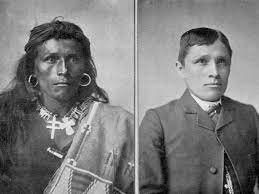


We very rarely hear Native American voices. Are you surprised by Ricardo's position?
What Exactly is Whiteness?
We will discuss whiteness and white privilege. Does White privilege even exists and what does that really mean? Whiteness is a constructed mythology designed to not so much to keep people back but to keep some people in the front. In Sociology and critical race studies, whiteness refers not simply to skin color but to a social, historical, and political construct that defines what it means to be “white” and how that identity operates as a form of power and privilege within racial hierarchies. Whiteness is a social system of racial meaning and advantage that positions white identity as the norm, the standard, and the center of social power. For the Sociological areas that study whiteness, it is not about individual people being white, but about how societies organize privilege and exclusion around the idea of being white.


White Trash: The 400-Year Untold History of Class in America by Nancy Isenberg (2016) is a historical and sociological study of how class inequality, especially the stigmatization of poor whites has shaped U.S. identity from colonial times to the present.
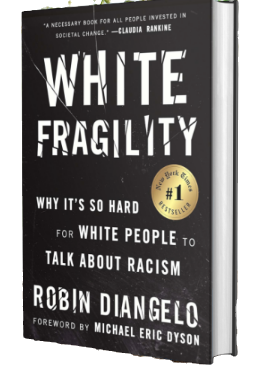
White Fragility by Robin DiAngelo is a book that explains why many white people become defensive, upset, or resistant when conversations about race, racism, or privilege arise. It argues that this defensiveness is not random, it is a socialized response that protects the advantages of whiteness.
Remember all white people are not equal, All white people are not rich and all white people are not at the top of the social ladder. However, because of how we discuss race many whites feel like they are falling through the cracks. We never talk about white poverty or white unemployment etc... We don't identify white anything because white is the norm. White is the assumption. We will also talk about the drawbacks of being in the white groups.
In order to address race relations issues we have to be able to analyze how whiteness operates in the society.
Racism as a Mental Illness
During this session. I will argue that Racism fits the description of a mental illness. Racism is currently not classified as a mental illness in psychology or psychiatry. Sociologists, however, often analyze racism as if it functions like one because it distorts perception, produces irrational beliefs, and leads to harmful behaviors. In sociology, racism is understood as a social pathology. Racism a socially produced form of distorted thinking that harms both individuals and society. The last few years has shown that racism continues to remain a social problem for the people who experience it. I will argue that racism is also a social problem for people who practice it.

Mental illness, in sociology and in the broader social sciences, refers to a pattern of thoughts, emotions, or behaviors that causes significant distress, impairs daily functioning, or disrupts a person’s ability to meet social expectations. It is understood not only as a medical condition but also as a socially shaped experience — influenced by culture, inequality, stigma, and institutional responses.

One flaw in the sociological discussion of racism is that we never focus on the behaviors of the actual racist. Much of the research is done on the victims of racism. We never study the perpatrators. (few people admit to actually being racist) We will discuss what racism actually cost the racist as well as what racism actually cost society?
Think of what society would look like without racism.
People lose their jobs or careers, they randomly crash out about race, some feel driven to commit murder to get rid of the other groups. Why cant they just let race go. Why is it always on their minds?
Assignment: Racial Faux Pas Report
Racism report - document one incident of racism
Find and investigate one case of poor racial relations. Often times we have things I call racial "faux pas" people do things or treat people a certain negative way and then suggests that they did not know that it could be racially offensive. Often the people say "my bag" I didn't know it would be seen as racially offensive. For example nooses are often left on campus. If students are caught they often claim that they had no idea any one could be racially offended by what ever they did.
When I was a student at Mizzou one of the student clubs drew a photo of the members and replaced the black student with a monkey. They were shocked that any one could possibly take offense.
In our strange world these types of incidents happen all the time from comedians and actors blurting out the word Nigger to students having "racial" themed parties on campus.
Id like you to investigate one of these incidents in detail.
-
Tell what happened
-
Who was the victim or who was the target of the incident or statement?
-
How was it received by the public... was the incident a big scandal
-
Did people make excesses for the behaviors
-
Did the person get fired? Did they get punished or sanctioned in any way?
-
Find and include any images related to your incident from google images. (It could be cartoons, memes, symbols)
-
Were there excuses for the act or statement? If so what were they?
-
Has there been any long term consequences that sprung from your incident? ) (Laws or new policies)
-
Do you believe that the person didn't know what they were doing or saying? Why or why not?
-
You can also do this assignment as a visual essay or ppt. 4-5 pages max with images and 10-15 slides max.
Racial Faux Pas Example: Mayor Hits Rough Patch Over Watermelon Pic. in 2009, when Obama was president the Mayor of Los Alamitos, CA sent this photo around to the people in his office. He said he had no idea that it would or could be seen as offensive. He just saw it as funny. He even noted that everything is not about race. Why would he send the image, if you don't know the stereotypical relationship between blacks and watermelons the image makes no sense and it is not funny. Why not pumpkins? According to him, he had no idea it could be interpreted as racist. Mayor Grose said he wasn't aware of the racial stereotype that blacks liked watermelon. He ultimately resigned...
(Read More: https://www.cbsnews.com/news/mayor-hits-rough-patch-over-watermelon-pic/Links to an external site. )
Read More: https://www.ocregister.com/2009/02/24/mayor-is-criticized-for-white-house-watermelon-patch-e-mail/
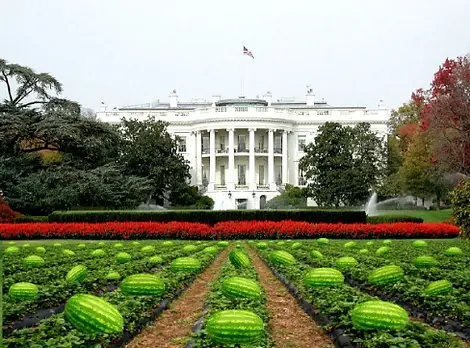
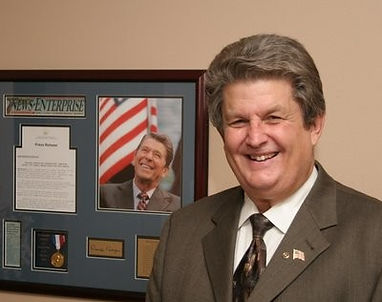
When questioned about the email he said that "EVERYTHING WAS NOT ABOUT RACE!" What was the image about?
2026 ‘Watermelon patch’ mayor may run again!
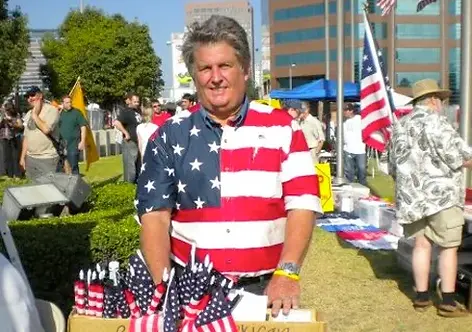
According to the Orange County Register, LOS ALAMITOS, The former mayor who resigned from the City Council after sending an e-mail portraying a watermelon patch in front of the White House is apparently considering an attempt to reclaim his council seat. Dean Grose was one of six elected to the 67th Assembly District on the Orange County Republican Central Committee, coming in fifth out of 12 candidates. He told OC180News that in the last six to eight months many people have come forward to support his re-entry into politics and have also encouraged him to run for a council seat come November. But he said he hasn’t yet made a decision to throw his hat in the race.
https://www.ocregister.com/2010/06/15/watermelon-patch-mayor-may-run-again/
Another example... he had no idea it could be seen as racially offensive.

Extra Credit: What happened to this judge? (5 points)
Can these men be trusted to be fair?
Prior to the internet, there are generally no lasting consequences for racism. (especially for the upper class) The person makes an apology, people talk about it for a minute. The celebrity offender may even be cancelled for a minute but most rebound... some actually do better than before the incident.
However, for regular people these types incidences are now costing them their lives and livelihoods.
Let's Talk 🙃