
Squires Sociology
Your site navigation menu is at the bottom of each page.

Social Problems

#12 Poverty
During this section we will talk about social class and issues related to poverty. Why does poverty exist in our contemporary society? How is poverty and gender related? Who make up most of the poor in the world today? who is responsible for poverty in the USA is it all the immigrants? Can we have a fair and equal system under capitalism?
Readings:
C&C Chapter 2
Intro Chapter 9 and 10
Poverty
Where are we headed as a society? Eventually we just discussed mega cities and all of the social problems that accompany dense populations. But we will also face declining dead rural towns high in crime, teen age pregnancy and drug use. This section will examine the state of poverty in the world.
•Social Stratification
–To rank individuals based on objective criteria, often wealth, power, and/or prestige
–Naturally creates inequality
•Income
–Refers to the money received for work or through investments
•Wealth
–Refers to all material possessions including income
We act as if the problems arise outside of our actions.
We treat social problems as objective conditions not something we create

Ways of explaining Poverty.

-
Conflict Theory places the strongest emphasis on economic structures and inequality.
-
Feminist Theory emphasizes structural inequalities related to gender.
-
Functionalism sees poverty as connected to the functioning of social institutions.
-
Social Constructionism focuses on how poverty is defined and understood.
-
Symbolic Interactionism focuses more on everyday experiences and social meanings than on large-scale economic structures.
CLASS - How Does Inequality Affect the Lives of People?
Our capitalist economic system requires inequality. You really can't have equality with capitalism. Capitalism requires stratification... the haves and have nots. The haves need the have nots to maintain their lifestyle. Think about the Trumps, who mops their floors and cleans the windows so they can live lavishly in Maralago.


We will also examine issues of global poverty and the growing divide between the rich and poor.
Family of 4 Poverty Threshold (2026)
$33,000 per year
$2,750 per month
Think about current rent prices in many states the average rent prices are often 1900 to 2000 a month.
A family of four earning $33,000 annually has approximately:
-
$2,750 per month before taxes
-
About $92 per day to cover... for 4 people
-
Housing
-
Food
-
Transportation
-
Childcare
-
Healthcare
-
Utilities
-
Clothing
-
Sociologists argue that this amount is too low to fit the current standard of living and this encourages or exacerbates diverse social problems.

This is where the 1% lives. Who maintains this place? This is the presidents residence. How much maintaince does he do on his home?
Social Mobility
Social Mobility -–Term that describes ability to change social classes.
–Horizontal Mobility refers to moving within same status category. For example, you move from being a 4th grade teacher at one school to being a 4th grade teacher at another school.
–Intragenerational Mobility occurs when individual changes social standing, especially in the workforce. For example, you get promoted from line worker to supervisor.
–Intergenerational Mobility refers to change family members make from one social class to next through generations. For example, your grandparents were sharecroppers and now you are CEO of a corporation.
About 4 million college graduates live below the poverty line in the United States.
The most recent national data show that approximately 4.04 million people with a bachelor's degree or higher were living below the federal poverty line.
Unfortunately, today we have Downward Mobility…. Kids doing worse than parents. This upcoming generation won't be able to afford a home like their parents and grandparents. No matter how hard they work. If we stay on this social trajectory things won't get any better for future generations.
Important Note: The data coming out of the federal government needs to be examined very carefully. The numbers may not reflect the actual facts.
Look at the chart on the left. What types of jobs are currently being cut or reduced? What jobs are going to be replaced by AI? Who will be building houses? Who will be preparing the artificial food?
Hospitals are closing and nursing and some other health care fields have been demoted from professional degrees. This means that students in those degrees have limited options for funding.

Choose your major and future career carefully. There is nothing worse than spending 4 to 5 years and thousands of dollars in college and not being able to find a job. A college degree was seen as a buffer against poverty, but not so much these days.


Assignment: poverty report fact sheet
Assignment: Poverty report. Select your favorite country or a country you always wanted to visit and do a comprehensive investigation of poverty in that area. You can also examine any state or even your own community. After gathering data, create an informational infographic teaching about the topic.
DO NOT USE AI TO CREATE YOUR FACT SHEET! YOU MUST COORDINATE AND PRESENT THE INFORMATION YOURSELF.
Below are some fact sheet examples you can make all of these easily on CANVA. I also put specific instructions on how to sign up free for CANVA in the course modules.
The examples are diverse but they have a few things in common.
-
They have a clear title so the viewer knows what the document is about.
-
They are symmetrical and the images and text are well placed.
-
Their text is short and easy to see and understand. Even the examples that are filled with information are clear.
-
The fact sheet has clear organized information
-
The colors complement and contrast with each other so that they are clear distinctions for the viewer.
References
-
You must use at least 4-5 sources. You cannot just copy someone's website. You have to create your own presentation of the data. I know other people can do it I need to see that you can.
-
The images and resources must be cited on the fact sheet.
Fact sheets are not about your opinions or what you think about the issue. Fact sheets are about the facts. I pulled some different fact sheets from the internet as examples.
All of them have good info. The question related to a fact sheets effectiveness is,
-
Would you stop and look at it?
-
Would you trust the information presented?
-
Does the factsheet provide a reference source?
-
Is the fact sheet just boring? Are the colors or text off putting or mismatched?
-
Does the fact sheet use words you understand?
-
Does it use unexplained abbreviations?
-
Does the fact sheet need an additional back story to make it make sense to the viewer? In other words, does the fact sheet need additional material to really inform the viewer?
-
Does the fact sheet assume that the viewer already knows about the issue?
-
Does the fact sheet teach anything? In other words, did you learn anything from looking at the sample fact sheets below?
-
Which one of the sample fact sheets would you remember?
-
Is it clear what the fact sheet is trying to accomplish? What does it want you to know?

This document has very good info. BUT would you stop and read it. Does it grab your interest? If it popped up on your feed, would you scroll past it? At face value is this an effective fact sheet? Would visuals have made it better?

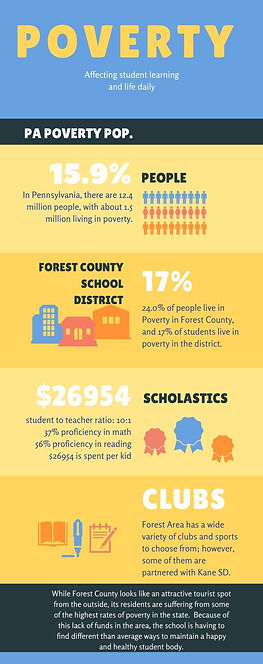

When doing this assignment, ask yourself if your fact sheet would be useful to the general viewer.
I am the general viewer so do not assume that I know anything about poverty in the country you selected.
Teach or inform me about the poverty area you selected.
Dollar Street
Check out the Dollar street website. This site allows you to visit different countries and look at families from different social classes. I good place to start your assignment is to look up poverty or the lower classes families in the country you selected. You can also use screenshots of images from this website in your fact sheet.