
Squires Sociology
Your site navigation menu is at the bottom of each page.
Social Problems

Topic 4. War and Terrorism
The sociology of war is a subfield of sociology that focuses on the macro-level patterns of war making, how societies engage in warfare, the meaning that war has in society, and the relationship between state structure and war making. A related subfield is military sociology, which focuses more explicitly on the organization and functioning of military forces and civil- military relations. These lines of scholarship are bound together by the basic premise that understanding war necessitates understanding those who fight it, and vice versa. The sociology of war overlaps with other fields that share an interest in government and politics, such as military history, political sociology, political science, and international relations. However, these fields tend to be concerned primarily with how wars begin and end, whereas the sociology of war tends to focus more explicitly on the cultural and social implications of war and how war and society act and react upon each other.
Reading:
-
C&C Chapter
-
Intro Chapter 17
-
Other reading links posted to canvas
Is WAR part of the human condition?
Historical, anadotal, and archelogical evidence suggest that war seems to be a part of many diverse cultures. How different sociological theorists view war depends on the theoretical perspective. Most sociologists agree that while conflict is inherent to social life, organized war is not biologically inevitable. War is shaped by political, economic, and cultural systems. In other words, humans may have conflictual tendencies, but war itself is a social invention, not a natural law. During this session we will talk about how various sociological theorist approach the issue of war in society. We will also look at the US participation in various wars, and how the country is perceived globally.


Quick War History
•Classical Period – (Greece & Rome & prior)
•The Middle Ages (AD500 to 1453 - Turkish conquest of Byzantium)
•The Age of Gun Powder (from 1453 to 1776) (Including American and French Revolutions)
•The Long 19th Century (1776 to 1918)
•Contemporary Period (WW2 and Cold War)

Military Industrial Complex (MIC)
The military‑industrial complex refers to the powerful, interconnected network of the military, the defense industries, and government policymakers
that work together to shape national defense priorities, military spending, and foreign policy.
The term highlights how economic interests, political power, and military institutions become mutually reinforcing, creating a system where war preparation becomes a permanent, profitable, and normalized part of society.
I found this summary of a discussion of war and terrorism. This is an excellent summary it does a good job of explaining the major issues and concepts. You can access the site from here or you can visit the site directly at: https://slidetodoc.com/war-and-terrorism-chapter-14-the-problem-in/
USA, so many wars so little time!
The U.S. Role in Major Global Wars
Brief Overview
🟦 World War I (1917–1918)
The U.S. entered late but decisively. By sending two million troops to Europe, the U.S. “tipped the balance” of the war, helping the Allies break the stalemate and forcing Germany to seek an armistice.
🟥 World War II (1941–1945)
The U.S. became the arsenal of democracy, supplying weapons, financing Allied operations, and fighting in both the European and Pacific theaters. After victory, the U.S. emerged as a global superpower, shaping the postwar world order.
🟩 Cold War (1947–1991)
Rather than a single war, this was a global struggle against the Soviet Union. The U.S. used:
-
Military alliances (NATO)
-
Proxy wars (Korea, Vietnam)
-
Nuclear deterrence
-
Economic and diplomatic influence
This era established the U.S. as the leader of the liberal international order.
🟧 Korean War (1950–1953)
The U.S. led a UN coalition to repel North Korean forces and prevent communist expansion in East Asia. This solidified America’s long-term military presence in the region.
🟨 Vietnam War (1955–1975)
The U.S. intervened to contain communism, escalating into a massive military commitment. The war ended in withdrawal and reshaped American public opinion, foreign policy skepticism, and military strategy.
🟫 Gulf War (1991)
The U.S. led a multinational coalition to expel Iraqi forces from Kuwait. This showcased U.S. technological superiority and reinforced its post–Cold War dominance.
🟪 War in Afghanistan (2001–2021)
Following 9/11, the U.S. invaded Afghanistan to dismantle al‑Qaeda and remove the Taliban. It became America’s longest war, part of a broader counterterrorism strategy.
🟫 Iraq War (2003–2011)
The U.S. invaded Iraq to remove Saddam Hussein, citing weapons of mass destruction (which were never found). The war destabilized the region and reshaped global perceptions of U.S. power.

What is Facism?
We will talk about social organization and political beliefs. What are fascists? What do they stand for and why are we always fighting them? We will talk about Antifa (this group has been officially defined as a terrorist's organization.) We will discuss how this political system differs from capitalism and socialism.
Fascism is not simply “strict government” or “politics I don’t like.” It is a specific, historically grounded ideology defined by:
-
Ultranationalism
-
Anti‑democracy
-
Mass mobilization
-
Mythic identity
-
Glorification of violence
-
Suppression of dissent
Understanding these truths helps prevent the term from being misused and helps identify when fascist patterns re‑emerge.
What Antifa Is (Definition)
Antifa is short for “anti‑fascist.” It is not a formal organization, not a political party, and not a centralized movement. Scholars and journalists describe it as a loosely connected network of activists who oppose:
-
Fascism
-
White supremacy
-
Far‑right extremism
-
Authoritarianism
Antifa groups typically operate at the local level, and their tactics range from peaceful protest to more confrontational direct action. They do not have a national leadership structure, membership list, or unified platform.
How the Current U.S. Administration Views Antifa
The current administration (President Donald Trump, as of 2026) has repeatedly described Antifa as:
-
A violent extremist movement
-
A domestic threat
-
A group responsible for civil unrest in certain protests
Administration officials have stated that Antifa represents a security concern, even though federal agencies such as the FBI have noted in past public statements that Antifa is not a formal organization and therefore cannot be designated the same way as structured groups.
Read More" I found an article that supports this position. If you wish to follow up check out. https://capitalresearch.org/article/origins-of-antifa/


How Scholars Describe the U.S. Role in Global Wars
Across sources, the U.S. role is characterized by:
1. Global Leadership
The U.S. positions itself as a defender of democracy, human rights, and international order.
2. Military Dominance
The U.S. spends more on defense than the next ten countries combined and maintains bases in over 80 countries.
3. Interventionism
From WWI to Afghanistan, the U.S. often intervenes to shape global outcomes, deter rivals, or protect economic and strategic interests.
4. Contested Strategy
Debates continue about whether the U.S. should:
-
Police the world
-
Lead through alliances
-
Practice restraint
-
Focus on domestic priorities
The U.S. has played a central, often decisive role in major global wars over the last century. Its involvement is driven by a mix of:
-
Strategic interests
-
Ideological commitments
-
Global leadership ambitions
-
Economic and security concerns
But its role is also contested, with ongoing debates about how much the U.S. should intervene abroad.
Should we be in this current war? Have we entered into an unwinnable situation?
C Wright Mills - The Power Elite
"The power elite is composed of men whose positions enable them to transcend the ordinary environments of ordinary men and women; they are in positions to make decisions having major consequences.
Whether they do or do not make such decisions is less important than the fact that they do occupy such pivotal positions: their failure to act, their failure to make decisions, is itself an act that is often of greater consequences than the decisions they do make"
(The Power Elite, 1956, p. 4).

Mills argued that in the United States, real power is concentrated in the hands of a small group of elites who control the military, corporations, and political institutions. These groups form a triangle of power, coordinating decisions that shape national and global outcomes. As we see from recent evens, often beyond democratic accountability. These elites share similar backgrounds, education, and social circles, reinforcing their unity and worldview. Mills saw this as a structural phenomenon, not a conspiracy. He said that this was a sociological pattern of institutional overlap.
Three pillars of the power elite

War IRL - Trump Supporters
THREATEN CIVIL WAR
In the last few years there has been some talk about a new American Civil war. Lets talk about it. What would an American civil war actually look like in 2026? Lets talk seriously about this threat. Do you think people actually want a real war?
During the new civil war where will the bodies fall?
Where will the fighting occur?
How will we know who to shoot at? Will each side create uniforms?
Who will the official military support?
Will neighbors shoot each other in the streets?
How will this war end? Who will win and who will lose?
Who will benefit from the war? Who could make money?
Will you fight or let your kids fight?
How long do you think the war will last?
What will the country look like after the war?
Was the January 6th insurrection the first shot in the proposed war?

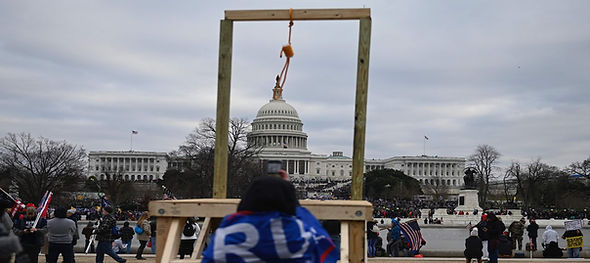

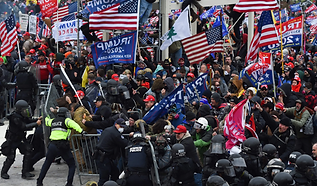
Was this an act of terrorism?
Why or why not?
What would have happened if the group was successful in stopping the election? What would the country look like today if they actually got a hold of Mike Pence and hung him?
Characteristics of Terrorism
•Pre meditated act
•Purposeful political motive
•Targets noncombatants
•Carried out by sub national groups
•Includes ongoing threat of violence
I asked AI To create an image of the next American civil war. This is one of the images it created. Really look at it. It says a lot about wat a civil war will look like.


Declaring War on Social Problems
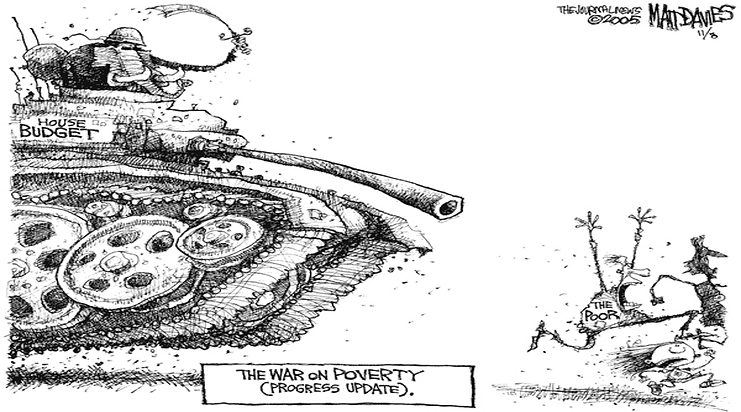
During this session we will also touch on the idea of declaring WAR on social problems. What does it mean to declare war on poverty or drugs?
We will discuss the 1999 article by Joel Best, What’s wrong with declaring war on social problems?

“The war on poverty suggests massive mobilization against a universally hated enemy, and thereby helps win political support. It gives people the gratification of seeing themselves support a crusade against evil”. (Best, 1999)
Assignment
Assignment: War Report Visual Essay – Pick a current war and create an infographic fact sheet of information on the conflict using Canva. Give major information on the conflict. Who is fighting, how long, what is the cost of the war, what is the death toll, how did the war end if it did? Were there major battles? Provide enough information for the viewer of you fact sheet to understand the conflict.
I’m trying to figure out how you can post these to the whole class. I do not want a biased one sided report. I want a comprehensive understanding of the arguments leading to or continuing the war. For example, if you want to examine the Israeli war against Iran you have to investigate both sides of the argument. FYI the USA just dropping random bombs on countries like Venezuela is not only illegal it is not a "war." You can pick a war anywhere in the world.
You must use Canva infographic or poster option to complete this assignment. (No word or ppt docs you will not get complete points) Canva will allow you to make a comprehensive document because you can fit a lot of info on one page or make the page the size you want. Canva also has a lot of templates you can customize. Use images, charts or other visuals to enhance your infographic. All submissions must have reference info. You can include sources with the data, or you can put all the reference info together at the bottom. Use headings to guide the viewer and help us understand your major issues. People don't read too much information so make you data clear and to the point.
Clear title introducing the topic
Good image to support the information and clear dates presented
Here is just one example of what you can create. This sample has some good parts and bad. If you were grading this document what grade would you give it? Did you learn anything from it? Was it clear and well presented? Was it visually attractive or something that draws the viewer in? This document mentions nothing about race and that was a big part of the civil war. In 100 years if you came across this fact sheet would you really know about the civil war? How would you fix this?
For the viewer these terms could be defined.
From this fact sheet we don't really know which side stood for what

How could this info be enhanced... how many people died? Simply knowing it was the bloodiest day makes no sense if we don't know what the numbers are.
Good use of titles to organize the information.
Could have added reference information here. Just let us know where your data comes from. You can site images sources as well.
This was a good document, very attractive and the basic info is presented. But this fact sheet also assumes that the viewer knows something about this war already. I don't want you to make that assumption. Just looking at this fact sheet you would not know what really happened during the civil war. Who was enslaved? Who was emancipated? What was really at stake in this war? Was the union in danger? A few more bits of information would make this fact sheet informative.
This fact sheet is a product of AI. It looks great but the information is lacking or not comprehensive. With regards to this conflict AI missed the nuances of the war. Yes, it does give facts, but not the context to help us understand the war fully.