
Squires Sociology
Your site navigation menu is at the bottom of each page.

Sociological Theory SA502
Topic#3 - Feminist Theory
During this section we will address the history and development of Feminist Theory.What exactly is Feminist theory? What are the domain assumptions of the various "feminist" theories? Are they the same for each theory? We will also unpack"Standpoint" theory and Black Femenist Theory?
I included Feminist Theory in the early weeks of the semester, because it is often left to the end of the semester when we are running out of time and because it is a good example of how one theory can be approached from different sociological angles. Feminist theory is actual a combination of several of the other theories. Although originally inspired by conflict theory, Feminist Theories can be functionalists, symbolic interactionists, conflict theorists, social psychologists or any of the other theories discussed in Sociology.
What makes a theory “feminist” is that at the core they believe that women should be included in all theoretical analysis and that there is general gender inequality in society. They argue that women experience the world differently from men and they point out that many social theories simply assume males as their base unit of analysis. All feminist theoriest see a problem as female inequality. However all of the theories done agree with the root cause of this inequality or the social solutions to fix it.
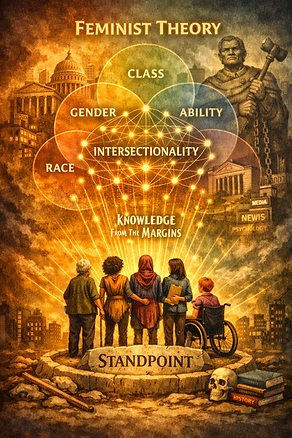
Feminist Standpoint Theory for example, says that it is important to understand the perspective of viewer. Where you stand determines how the world looks to you and how you see the world. According to the stanford Encyclopedia of Philosophy Feminist Standpoint Theory. is in the tradition of other Critical theories aim to empower the oppressed to improve their situation.
•This perspective is influenced by the Sociology of Knowledge that claims less powerful members of society are able to achieve a more complete view of social reality than are others.
•Less powerful groups, like women and minorities, may be less incorporated into the reward system of society and more clear sighted and critical about its inequalities and deficiencies.
Various feminist theories focus in on the structure of patriarchy that dominates many societies. In sociology, patriarchy is studied as a system of power relations, not just individual attitudes. It intersects with race, class, sexuality, and other hierarchies to produce complex forms of inequality — a concept central to intersectional feminism and gender studies.


Patriarchy is a social system in which men hold primary power and dominate roles of political leadership, moral authority, social privilege, and control over property. It organizes society around male authority, often positioning men as the default or superior gender in public and private life. ChatGPT
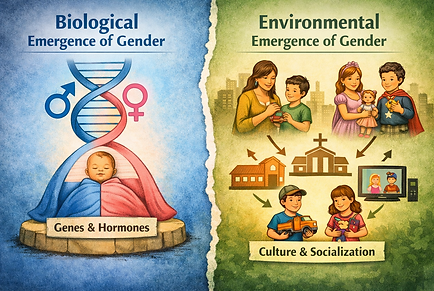
Other theorist like Caroline Frisby focus on how we developed the current gender relations. Is it biology or environmental factors that lead to our gender relations. Frisby notes that the problem with trying to understand the status of men and women is that we don’t know much about women’s past. We really don’t know the breadth of their power and influence in society. "Once we started recording history (HIS- STORY) the division was set". We learn gender roles in childhood, through play, images, subliminal messages, schools, language, religion, and interactions etc., but no body really knows where they come from.... regardless of origins we are bound by gender role creation.

In class, we will discuss the four waves of feminism. This idea reflects the fact that the fight for women’s equality has taken different forms over time. The first wave focused on making women visible in public and political life. By the fourth wave, women are asserting their individuality while also recognizing the shared struggles faced by all women.
Feminism = The Social Movement
Feminism is a social and political movement focused on ending gender‑based inequality. It involves activism, organizing, policy change, and cultural transformation.
-
It’s about action: protests, campaigns, legal reforms.
-
It includes many branches (liberal, radical, Black feminism, etc.).
-
It asks: How do we change society so women and marginalized genders are equal?
Think of feminism as the practice.
Feminist Theory = The Sociological Framework
Feminist theory is an academic and analytical approach used in sociology to understand how gender shapes social life.
-
It’s about explaining how gender inequality is produced and maintained.
-
It analyzes institutions, culture, power, identity, and intersectionality.
-
It asks: Why does gender inequality exist, and how does it operate?
Think of feminist theory as the analysis.
First things first, what is the difference between Feminism and Feminist Theory in Sociology?
Where do gender roles come from?
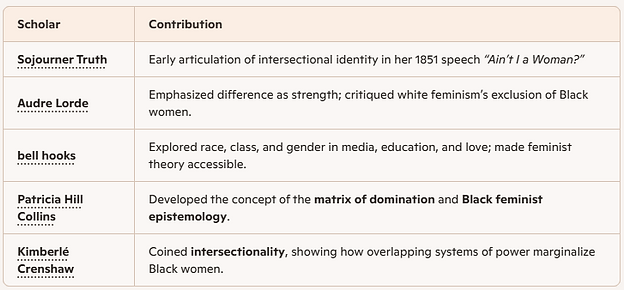
During the 3rd wave we get the rise of Black Feminist Theory. this theory points out that there is no one WOMAN experience. They point out that being a women does not make you any less racist, homophobic or any less discriminatory on other statuses. Black Feminist point out that Feminism was generally about white women struggle to be taken down from the pedestal white men place them on. Black feminist theory points out that many women like black women were never placed on a pedestal. They were never seen as pure or entitled. Where do non white women fit into this history of womanhood?
Black feminist theory argues that race, gender, class, sexuality, and other identities intersect to shape unique forms of oppression and resistance. It insists that you cannot understand gender inequality without also examining racism, capitalism, and heteropatriarchy.
Black feminist theory influences Sociology by:
-
Challenging Eurocentric and male-centered frameworks that underlie major theories.
-
Highlighting how knowledge production itself can be biased. The story of "women's" histoty is also ome sided
-
Suggesting tools to analyze structural inequality and cultural representation.

Although in our patriarchal society women in general have lower status than men. It is not true for all women. All women don't have the same distance to traverse to get to equity. Even though the objective data shows that there is a good deal of inequality between men and women on the planet. All "feminist" theorists don't agree on the root of the problem or how to fix it.
Readings
Black Feminist Theory
-
Reading: Ritzer Chapter 13
-
Reading: W&W Part 3 &Part 4



Do each of these girls have the same journey to run to reach success? What types of things would you look at to determine the likely winner of this race. ?
Here is a list of the different Feminist Theories. Each theory has its own explanation for the causes of gender inequality, the perpetrators of gender inequality and ultimately the solutions to fix the problem.
-
Liberal Feminism
-
Radical Feminism
-
Marxist Feminism
-
Socialist Feminism
-
Black Feminist Theory
-
Intersectional Feminism
-
Postmodern / Poststructural Feminism
-
Queer Feminism
-
Ecofeminism
-
Transfeminism
-
Cultural Feminism
-
Global / Postcolonial Feminism
-
Indigenous Feminisms


What theory does Firestone represent?
Videos
Assignment
For this assignment I want you to create a small qualitative study on community understanding of feminism and femimist theory. You are to interview one male and one female (trans is also ok) about their ideas, beliefs, and assumptions regarding feminism and feminist theory. Do they know the difference? During this semester we do not really get too much time to talk about the various research methods. This assignment gives you an opportunity practice your interview and research report skills. Research studies do not have to be large to provide valid information. Depending on your research question you can study one person (Micro) or one country.(Macro) In addition to examining beliefs about feminism, this assignment is also about developing your research skills. After completing both interviews, and writing up your research paper, please post a summary of your research to the Canvas discussion board and reflect on why you think they hold these views. Full details posted to canvas.

Get it? Where do you stand?
Create an interview instrument. The final number of questions is completely up to you. But I have included some required questions here. Remember to construct your questions to encourage discussion. So simple yes or no answers will not give you real information. Use followup open ended questions. I recommend reviewing the research section in the Intro to Sociology text if you need a review on the research methods.
Required Questions - You may also add additional questions
-
Do you consider yourself a feminist? Why or why not?
-
What do you think about people who call themselves feminists?
-
(Be specific: What do they think about men who identify as feminists? What about women?)
-
-
Where did you learn your ideas about feminism?
-
(Family, school, religion, media, social media, personal experiences, etc.)
-
-
How do you define feminism?
-
Ask them to explain in their own words.
-
-
Do they know anything about the various Feminist Theories? You can ask them about specific theories or theoretical ideas.
-
How do you feel about men participating in feminist movements or calling themselves feminist? Do they think men can be "real" feminist?
-
What stereotypes about feminists have you heard?
-
Required Report Format
The following format follows the standard research expectations for sociological studies. The sections below give you the important who, what, where, why, when info so that the research can be repeated and so the reader understands exactly what the research is about. You can use headings in your paper, but I do not want a list or page of simple bullets. Provide an integrated essay. 100 points - 5-10 pages
-
Introduction paragraph: Introduce your research project and the overall goals of your study.
-
Sample information: Name and demographic information of your interviewees. (Age, Sex, Race, etc...You can make up a pseudonym for your respondents.) Briefly explain why or how you chose them.
-
Methods: Provide information on how you conducted the interview. (... in person, or on the phone,) How long did the interview take? Where did it take place?
-
Instrument: Provide a list or discussion of the questions asked.
-
Results: What did your respondent actually say. Write up their responses exactly.
-
Analysis: After both interviews, compare their answers. Identify similarities and differences, you can also discuss ideas that surprised you in your interviews. Did you see any patterns related to gender, age, culture, religion, media, or upbringing. remember, you are analyzing, not judging.
-
Interpret the findings: Speculate on things like why do they feel the way they do? What social forces do you think shaped their beliefs? Did they know anything about the sociological definitions of feminism and feminist theory?
-
Conclusion: Finally, what does this tell you about how feminism is understood in everyday life? If you could redo the study would you? Your conclusion should show critical thinking. What if anything would you change about your interview techniques?
-
Publish your findings: Post a summary of your research to the discussion board.
-
Provide your peers all of the information they need to know to fully understand your research project. Write clearly and respectfully.
Avoid Double-barreled Questions. These are questions that ask for 1 answer for a multi question option.
“Should the state abandon its community-based services and spend the money on improving institutional care?” The person may actuall agree with one and not the other.
Just the
Facts!


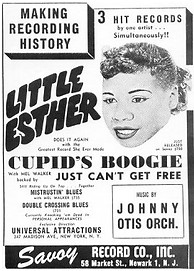
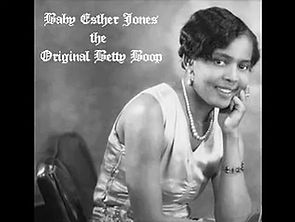
How would you classify the character Betty Boop? Betty Boop is an interesting case. Not only does her existence raise questions about femininity and how it is used, she also is a good example of what Black Feminist point out as the marginalization of Black women. Is she a feminist? As a feminist is it ok to use your femineity or what ever feminine wilds are to get what you want? If you flirt with a cop to get out of a ticket can you still call yourself a feminist.
IRL - Critical Thinking Assignment
Check out this web page... is there any part of the story that has been left out.
Betty Boop is a fascinating figure in feminist theory and cultural studies because she embodies the tension between female empowerment and objectification in early 20th‑century media. Scholars often use her as a lens to explore how femininity, sexuality, and race were constructed in American popular culture. Created in the 1930s by Max Fleischer, Betty Boop was one of the first animated female characters to display sexual agency and independence. She wore short dresses, spoke in a flirtatious tone, and represented a modern woman who worked, danced, and lived freely. Think about how radical image would have been for Depression‑era America.
Empowerment Themes Betty Could Represent
-
Sexual autonomy: Betty’s confidence and self‑expression challenged restrictive gender norms.
-
Working woman: She appeared as a performer, secretary, or nurse — reflecting women’s growing presence in public life.
-
Resistance to censorship: When the Hays Code demanded “moral” portrayals, Betty’s character was toned down, symbolizing how women’s freedom was policed.
Betty also symbolized the problematic state of race relations during the early 20th century.
Origins of Betty Boop
Whitewashing and Cultural Appropriation
Helen Kane and Legal Controversy
Legacy
Despite the whitewashing, Betty Boop’s character preserves elements of Baby Esther’s jazz-era flair, playful voice, and stage presence. Modern discussions and media, including performances by Taraji P. Henson, have highlighted this history, acknowledging that the original inspiration for Betty Boop was a Black woman. This story underscores broader conversations about racial erasure and cultural appropriation in early 20th-century entertainment. PBS

Classic Recommended Readings


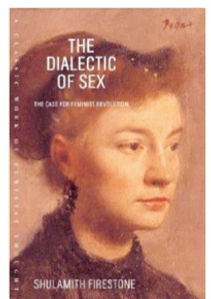

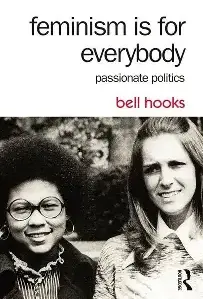

This is just a drop in the bucket. Do your own research there are many good books that explain the various theorical perspectives.
