
Squires Sociology
Your site navigation menu is at the bottom of each page.
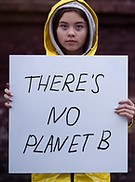
Social Problems
Only when the last tree has died, the last river has been poisoned and the last fish has been caught, will we realize that we cannot eat money.

Topic #3 Environmental Sociology
This section will examine environmental social problems. We will discuss all of the ways that people impact their environment. Sociologists who study the environment often focus on Sustainable Development. This concept means meeting the needs of the present without compromising the ability of future generations to meet their own needs. It’s about balancing economic growth, social well‑being, and environmental protection so that progress today doesn’t destroy the planet tomorrow.
Reading:
-
C&C Chapter 15.3 pages 591-612
-
Intro Chapter 20
Environmental Sociology
Environmental sociology is typically defined as the sociological study of societal-environmental interactions, although this definition immediately presents the perhaps insolvable problem of separating human cultures from the rest of the environment.
Environmental sociologists generally focus on studying the social factors that cause environmental problems, the societal impacts of those problems, and efforts to solve the problems.
Environmental Justice
What is Environmental Justice?
According to the EPA, “Environmental Protection Agency) Environmental Justice is the fair treatment and meaningful involvement of all people regardless of race, color, national origin, or income with respect to the development, implementation, and enforcement of environmental laws, regulations, and policies.

Several years ago, most grassroots activists and the U.S. Environmental Protection Agency (EPA) abandoned the term environmental equity in favor of environmental justice (Foreman, 1998; Taylor, 2000).


The term NIMBY stands for “Not In My Backyard.”
It describes a social attitude where people support a project or policy in principle, like renewable energy, waste management, or affordable housing, but oppose having it located near their own community.
Sacrifice Zones
Sacrifice zones are places where we dump the societal trash. Usually poor, minority, or immigrant neighborhoods. These zones are places where people have little political or economic power.
E‑waste (short for electronic waste) refers to discarded electronic devices and components, such as computers, smartphones, televisions, batteries, and circuit boards.
According to the Global E‑Waste Monitor (2024) and EPA estimates the U.S. generates roughly 6.9 million metric tons of e‑waste per year. Or about 21 kilograms (≈ 46 pounds) per person annually. Unfortunately less than 20–25 % is properly recycled; the rest ends up in landfills or exported to developing countries for informal recycling.
Trash and E-waste


Failure of the Recycling system.
*Do you recycle?
*How many phones or computers have you had?
Why dont we care?


Mass Animal Deaths

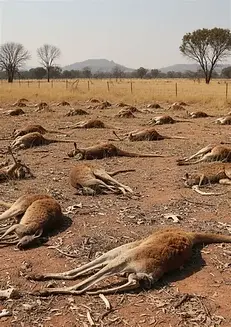
Often called mass mortality events (MMEs) Mass animal deaths refer to sudden, large‑scale die‑offs of wildlife, livestock, or marine species within a short period of time. These events often signal serious ecological stress or human‑driven disruption. What is interesting is that these die offs are not covered on the news. This is happening everyday but it goes unnoticed. The problem is that this is not just about loving animals it is about our FOOD. What is killing our food?
Check out the following website for more information.


Bees Dying Off

Bees pollinate 80% of the world's plants including 90 different food crops. 1 out of every 3 or 4 bites of food you eat is thanks to bees. The honey bee is responsible for $15 billion in U.S. agricultural crops each year.
-
Since the 1990s, managed honeybee colonies have dropped by roughly 25–30% worldwide, though the rate varies by region.
-
In the United States, beekeepers report annual losses of 30–45% of colonies, according to the USDA and Bee Informed Partnership.
-
Wild bee species (like bumblebees and solitary bees) have seen even sharper declines — some species have lost over 50% of their range in North America and Europe.
If the bees die so do we!
Deformed Wildlife


Frog deformities, such as extra or missing limbs, are caused by a combination of parasites, environmental pollutants, and other ecological factors, and they can significantly impact frog survival and ecosystem health. We will talk about what's happening to the frogs and other amphibians.


Water
The CWA (Clean Water Act) was enacted in 1972 to reduce or prevent the discharge of pollutants into rivers, lakes and coastal waters of the United States. However, many of these regulations are being removed. We will talk about water usage, pollution and what has come to be known as the "Water Wars".
The U.S. has vast freshwater resources like rivers, lakes, and aquifers, but distribution is uneven. Western and Southwestern states (California, Arizona, Nevada) face chronic water scarcity, while the Great Lakes and Pacific Northwest remain relatively water‑rich.
The Politics of Water.
During his first administration Donald Trump claimed that climate change is a hoax perpetrated by China or simply is a guise to raise taxes. During the first administration Governor, Mike Pence declared Indiana would not comply with the landmark Clean Power Plan soon after it was released by the Obama administration. The president actually sued the EPA numerous times, including on the matter of the Clean Water Rule.

Should water be privatized and owned by only the rich?
Should access to water be a human right?
What is the truth about bottle water?
Where are we headed in terms of environmental regulations?
Who has the right to earths water?
Should the government be responsible for managing water resources and distributing it fairly?
Extra Credit
Complete a water usage calculator and write up a reaction to your results. Did you ever consider how much water you actually use daily? Were you surprised by your results?
Post a screenshot of your results along with your write up. 1-2 pages 25 points
I have posted the access website here. You can select any free water usage calculator.
Climate change is intensifying droughts and floods, making water access less predictable. We will talk about the evidence of climate change and some possible social problems that will emerge. The science is uniform. Climate change is real and humans are contributing to the problem.
Climate Change
During this section we will discuss the various components of climate change. Should we act or not? What is the evidence of climate change? We will discuss the myths related to climate change.

Assignment - Discussion Post

Watch the video and discuss what you think we should do. Should we act to reduce climate change even though we don't really know what will happen? In your post you can also discuss your beliefs about climate change... and where you think that belief comes from. Did you ever do any research on the validity of climate change? 350-400 words
The reality is that climate change is measurable, accelerating, and human‑influenced, but also manageable through collective action, innovation, and equitable policy.
What are we really doing to the earth?
During this section we will talk about what we are really doing to the planet. We will also briefly talk about pollution and population growth. I heard Rush Limbaugh tell everyone on the radio to buy a Hummer. He said that you should not feel guilty for using unnecessary resources. He explained that you were just one person and your Hummer is not going to make that big of a difference to the world. From a sociological perspective there is a lot to unpack and criticize with this statement. This statement was the impetus for your environment assignment.

Assignment - Ecological Footprint
Complete your “Ecological Footprint” You must post a screenshot of your results and a write up reaction paper to the assignment. How many worlds would we need if everyone lived like you? to Tell the truth could you be considered an eco sinner? Do you spend any time thinking about the environment?


If your footprint equals 1 Earth, your lifestyle is globally sustainable.
The ecological footprint calculator is a tool that measures how much of Earth’s resources a person, community, or country uses — and compares it to how much the planet can regenerate. It’s one of the clearest ways to show whether our lifestyles are ecologically sustainable or if we’re using more than Earth can replace.
What It Measures
The calculator estimates your demand on nature across several categories:
-
Food consumption including your general diet, meat intake, processed foods, local vs. imported
-
Housing and energy, home size, electricity use, heating/cooling
-
Transportation — driving, flying, public transit
-
Goods and services like shopping habits, waste, recycling
The calculator converts all of this into global hectares (gha) which is a standardized unit representing the amount of biologically productive land and water needed to support your lifestyle.
Out of hundreds of students I have only had one student need only 1 world. What is funny is that everyone in the class thought he was actually homeless.
Anything above 1 world is crushing the earth.

Sustainable Development?
Sustainable development means meeting the needs of the present without compromising the ability of future generations to meet their own needs. It’s about balancing economic growth, social well‑being, and environmental protection so that progress today doesn’t destroy the planet tomorrow.
Are we meeting our sustainable development goals? Should you be worried about things going on in the environment?
I will explain how the image on the left relates to the question.
